SEO Agency Interamplify: What Buyers Should Check First
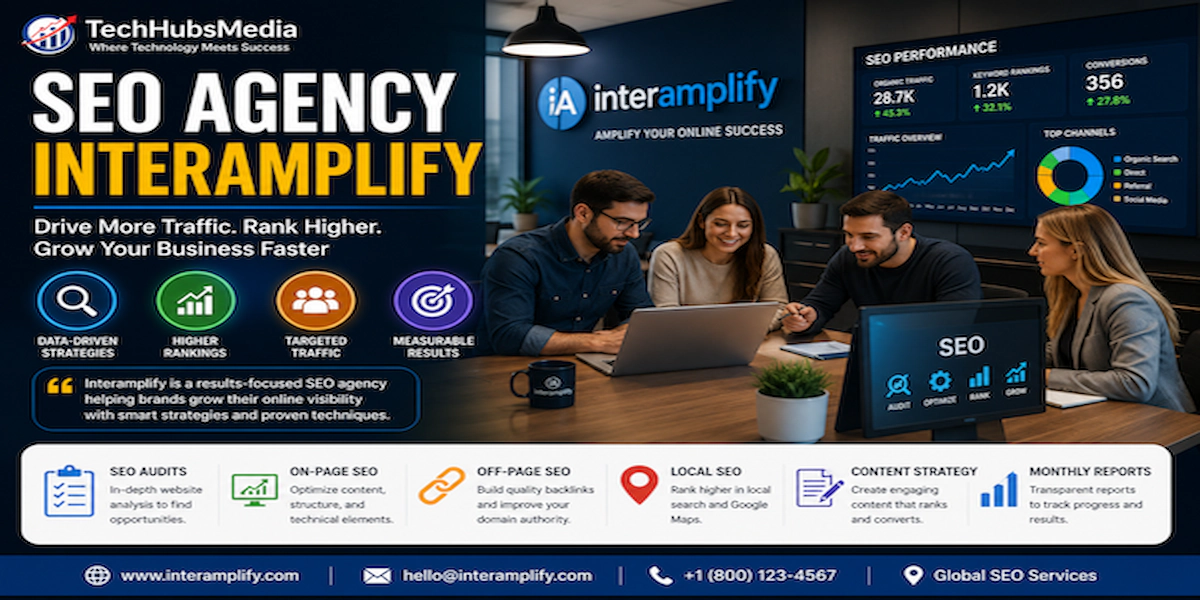
Quick answer: SEO agency Interamplify is a Spain-based international SEO provider known mainly for multilingual link building, digital PR and managed SEO programmes, including white-label work for other agencies. Directory listings put its minimum project budget at around $2,500, which places it in the mid-market and enterprise bracket rather than the small-business one.
People searching for SEO agency Interamplify are usually doing one of two things: checking whether the company is legitimate before a first call, or comparing it against another provider they already have a quote from. This review answers both, using what is publicly verifiable, and separates the parts you can confirm from the parts you have to take on trust.
For how link placements should be checked before anyone buys them, see our link building services.
Key takeaways
- Interamplify positions itself as an international link building and managed SEO provider, headquartered in the Murcia region of Spain.
- Its recognisable strengths are multilingual outreach, country-specific publisher networks and white-label delivery for other agencies.
- Public sources disagree on the founding year, listing both 2012 and 2016. Ask directly and get it in writing.
- Third-party listings indicate minimum budgets near $2,500, so it is not built for small local businesses.
- Most published reviews sit on sites that sell SEO services themselves, which is worth remembering while reading them.
What is SEO agency Interamplify?
SEO agency Interamplify is an international search marketing firm based in Spain, in the Alhama de Murcia area, that concentrates on authority building for brands operating across several countries and languages. Rather than presenting itself as a full-service local agency, it markets a specialism: acquiring links and coverage in specific markets through publisher relationships built per country.
It also appears in the Semrush agency directory under backlink management and ecommerce SEO categories. A directory listing proves a company exists and sells in a category. It is not evidence of results, and no serious buyer should treat it as such.
What SEO agency Interamplify actually sells
| Service | What it means in practice | Who it suits |
|---|---|---|
| International link building | Outreach per country and language, using local publisher lists | Brands expanding into new markets |
| Blogger outreach and digital PR | Editorial placements and press coverage as authority signals | Brands with something newsworthy to say |
| Managed SEO | Technical work, on-page optimisation, content and reporting | Teams wanting one provider for everything |
| Multilingual and hreflang work | Language versions set up so they do not compete with each other | Sites already failing on international setup |
| Affiliate and vertical SEO | Programmes aimed at affiliate, iGaming, crypto and finance niches | Operators in competitive regulated verticals |
| White-label delivery | Work resold by other agencies under their own brand | Agencies without in-house link capability |
| Self-service ordering | Buying placements directly without a sales call | Experienced SEOs who know exactly what they want |
The self-service option is the clearest signal of who the company is built for. Platforms like that exist for buyers who already understand link quality and want to skip the consultation. If that is not you, you will be buying something you cannot fully evaluate.
Who it fits, and who it does not
A reasonable fit: a brand selling in four or five countries that needs native-language coverage, an agency needing a link partner behind the scenes, or an established site whose content is good and whose authority is not.
A poor fit: a local business in one city, an early-stage startup that needs strategy more than links, or any company whose real problem is that its pages do not answer the query. Links do not fix a weak page. They make a weak page rank slightly higher for a while and then stop working.
The strengths worth acknowledging
- Specialism. Country-specific outreach lists are genuinely hard to build. An agency that has done it for years has something a generalist cannot improvise.
- Longevity. A company that has operated for a decade or more in link building has survived several Google updates that removed many competitors.
- Multilingual capability. Native-language placement and hreflang handling are common failure points, and both are core to its offer.
- Agency demand. Being chosen as a white-label supplier by other agencies suggests the delivery process is at least reliable.
The limitations to weigh
- Private case studies. The company emphasises client confidentiality. Understandable, and it also means you cannot verify outcomes before signing.
- Conflicting public facts. Review sites state different founding years and different office counts. Small discrepancies, but a reason to confirm basics yourself.
- Review quality. Most of page one for this brand consists of reviews published by SEO companies that sell competing services or affiliate links. Read them with that in mind, including this one: we run SEO services too, which is exactly why we are pointing it out.
- Budget floor. Around $2,500 minimum removes most small businesses from consideration.
- Link-led model. If your site has technical or content problems, a link-focused engagement treats the symptom.
What to ask before signing
- Can I see five live placements from the last 90 days in my target market and language?
- Are those pages indexed in Google right now, and can we check together on the call?
- Is the link editorial, or does the page carry a sponsored or partner label?
- What is the ratio of editorial placements to paid inclusions in a typical month?
- Who writes the outreach content, and are they native speakers in that market?
- What happens if a placement is removed after three months?
- How do you decide a site is not good enough to place on?
- What does the reporting show beyond a list of URLs?
Question two separates serious providers from the rest. An unindexed page passes nothing, and it is the single easiest check a buyer can run without any tooling.
How to judge the links yourself
You do not need an agency background to vet a placement. Open the site and spend two minutes on it.
| Check | Good sign | Warning sign |
|---|---|---|
| Topical fit | The site covers your subject regularly | Recent posts jump between casino, crypto, health and travel |
| Traffic | Organic visits from the country you are targeting | Traffic mostly from unrelated regions |
| Indexing | The exact placement URL appears in Google | Nothing found for the page |
| Placement | Inside the body of a relevant article | A footer, a sidebar, or a "partners" page |
| Editorial standard | Bylines, dates, real editing | A wall of guest posts with no other content |
| Transparency | No public price list for links | A "write for us, from $X" page |
Run this on the sample placements any provider shows you, Interamplify included. It takes ten minutes and tells you more than any pitch deck.
What international SEO costs in time
Buyers underestimate the calendar, not the invoice. A new market usually needs a localised page set, hreflang set up correctly, a few months of outreach before links accumulate, and then a further quarter before rankings settle. Six to nine months before a new country contributes meaningfully is a realistic expectation, and any provider promising faster in a competitive market is managing your emotions rather than your search presence.
That timeline is also why the cheapest option rarely wins. Two markets done properly beat six done badly, and the badly done ones leave links you may later want to disavow.
Alternatives worth comparing
Put any quote next to two others before deciding. Agencies commonly compared against Interamplify include Victorious and WebFX for broader US-focused programmes, and SaaS specialists such as Skale or Directive if your product is software rather than ecommerce. Those comparisons rarely come down to quality alone. They come down to whether you need links at scale across languages, or a programme that fixes strategy, content and technical health together.
If your bottleneck is a software funnel rather than authority, the questions in our guide on choosing a B2B SaaS SEO agency will fit your situation better than a link vendor comparison.
A note on speed promises
Any provider in this category will eventually be asked how fast results arrive. Be careful with confident numbers. Indexing can be quick, ranking is not, and authority built through links moves on a timescale of months. We looked at the wider pattern of instant SEO appearance claims and found the same thing every time: the mechanism being sold is usually indexing, while the thing being implied is ranking.
For the underlying principles that any agency should already be following, Google's own SEO Starter Guide remains the plainest reference, and it is a fair test of a proposal. If a recommendation contradicts it, ask why.
How we would approach the decision
Start by naming the bottleneck. Run your best commercial page through a simple check: is it indexed, does it answer the query in the first paragraph, and does anyone relevant link to it? If the first two fail, links are not your problem yet. If only the third fails, a specialist link provider is a sensible thing to buy.
Then buy small. One market, one quarter, an agreed number of placements you can inspect. Scale only after you have opened every link and checked it yourself. That approach works for Interamplify, for us, and for any provider you are considering. Businesses working in single local markets can apply the same logic at smaller scale, as we set out in our Basingstoke SEO guide.
Frequently asked questions
Is SEO agency Interamplify legitimate?
It is an established Spain-based SEO company with public directory listings and a long operating history. Legitimacy is not the same as fit, so verify placements before committing.
Where is Interamplify based?
Public sources place its headquarters in the Alhama de Murcia area of Spain, with staff and publisher relationships spread across several international markets.
What does Interamplify specialise in?
Multilingual and international link building, blogger outreach, digital PR, managed SEO programmes, affiliate and vertical SEO, and white-label services sold through other agencies.
How much does Interamplify cost?
Third-party directory listings indicate minimum project budgets around $2,500. Actual pricing is quoted per project and depends on markets, languages and volume.
Does Interamplify work with small businesses?
Generally not. The budget floor and the focus on multi-market authority work point toward mid-market, enterprise and agency clients rather than single-location businesses.
Can agencies resell Interamplify's work?
Yes. White-label delivery is part of its published offer, which is why some of its work appears under other agency brands rather than its own name.
Are its links safe for my site?
That depends on the individual placements, not the brand. Check topical relevance, organic traffic, indexing and placement position on every sample link you are shown.
How can I verify an agency's link quality?
Ask for five recent live placements, open each one, confirm it is indexed, and read the surrounding page to judge whether real people read that site.
How long before link building affects rankings?
Usually four to twelve weeks after the placement page is indexed, and longer in competitive markets. Steady monthly pacing beats one large burst of links.
Should I hire a link specialist or a full-service agency?
Hire a specialist when content and technical health are already solid. Hire full service when the whole programme, not just authority, needs building.
Conclusion
SEO agency Interamplify occupies a clear niche: international, multilingual authority building for brands and agencies that already know what they want. The specialism is real, and so are the limits, particularly the private case studies and the budget floor. Judge it the way you should judge any provider in this category, by opening five live placements and deciding for yourself whether a person would ever read that page.